- Research Catalog
Molecular Compounds & Peptides
All research materials are HPLC tested (≥99% purity) with complete Certificate of Analysis (COA) availability.

- Face Cream
- In Stock (120)
- Palmitoyl Tripeptide-5 + Argireline
Advanced Mitochondrial & Cellular-Energy Research Protocol
Mito Prime combines three compounds studied across complementary areas of mitochondrial biology: SS-31, MOTS-C, and NAD+. The research concept is designed around multiple stages of cellular energy production—from mitochondrial membrane integrity and metabolic signaling to the biochemical reactions that ultimately support ATP production.
SS-31 is a mitochondria-targeted peptide studied for its interaction with cardiolipin, a phospholipid of the inner mitochondrial membrane. Research focuses on mitochondrial membrane stability, electron-transport-chain function, oxidative stress, and cellular energetics.
MOTS-C is a mitochondrial-derived peptide investigated for its role in metabolic signaling, AMPK-associated pathways, glucose utilization, and cellular adaptation to energetic stress.
NAD+ is an essential cellular coenzyme involved in redox reactions, mitochondrial energy metabolism, DNA-repair pathways, and cellular signaling. Its NAD+/NADH cycling plays a central role in transferring electrons during energy production.
Together, Mito Prime provides researchers with a multi-compound platform for investigating how mitochondrial integrity, metabolic signaling, electron transfer, and ATP-related energy pathways interact.
Research Focus: Mitochondrial Function • Cellular Energy & ATP Pathways • Cardiolipin • AMPK Signaling • NAD+ Metabolism • Metabolic Research • Oxidative-Stress Research
Complete Mito Prime Kit: SS-31 10 mg — 9 vials MOTS-C 10 mg — 6 vials NAD+ 500 mg — 6 vials
21 Total Vials
RESEARCH USE ONLY NOT FOR HUMAN OR ANIMAL USE
PRice
$70.00
- Face Cream
- In Stock (120)
- Palmitoyl Tripeptide-5 + Argireline
Skin, Tissue Remodeling & Regenerative Research Peptide
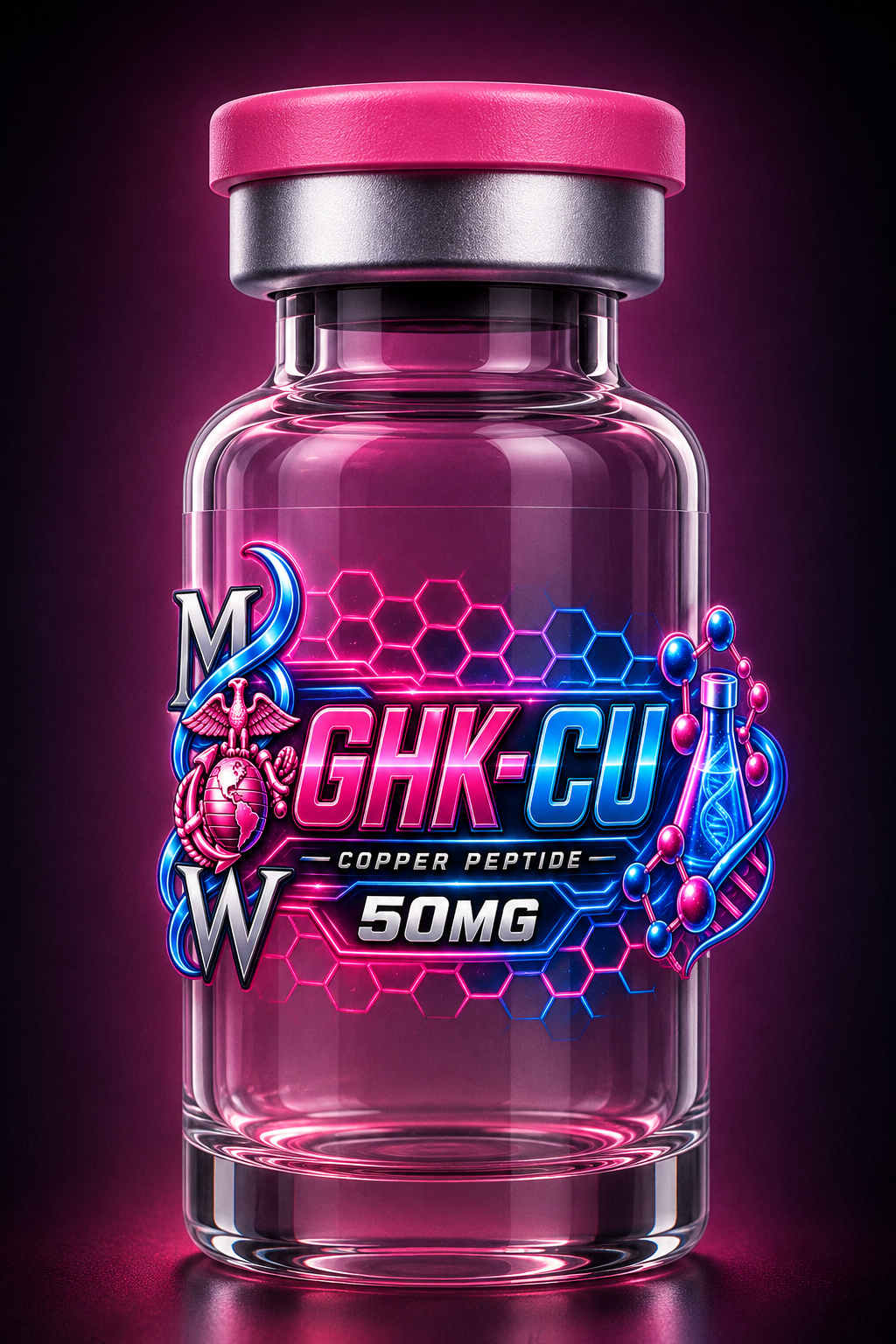
GHK-Cu is a naturally occurring copper-binding tripeptide composed of glycine, histidine, and lysine complexed with copper. It has been extensively investigated for its role in tissue remodeling, wound-healing pathways, extracellular-matrix regulation, and cellular repair signaling.
Research involving GHK-Cu has examined its influence on collagen and elastin production, fibroblast activity, angiogenesis, antioxidant pathways, and inflammatory signaling. It is also widely studied in laboratory models involving skin regeneration, hair-follicle biology, and age-associated changes in tissue structure.
Its ability to bind and transport copper is particularly important because copper serves as a cofactor for multiple enzymes involved in connective-tissue formation, antioxidant defense, and cellular function.
Research Focus: Collagen & Elastin • Skin Regeneration • Hair-Follicle Biology • Wound Healing • Tissue Remodeling • Fibroblast Activity • Antioxidant Pathways • Cellular Repair
Contents: GHK-Cu — 50 mg
RESEARCH USE ONLY NOT FOR HUMAN OR ANIMAL USE
PRice
$50.00 – $125.00Price range: $50.00 through $125.00
- Face Cream
- In Stock (120)
- Palmitoyl Tripeptide-5 + Argireline
PRice
$60.00
- Face Cream
- In Stock (120)
- Palmitoyl Tripeptide-5 + Argireline
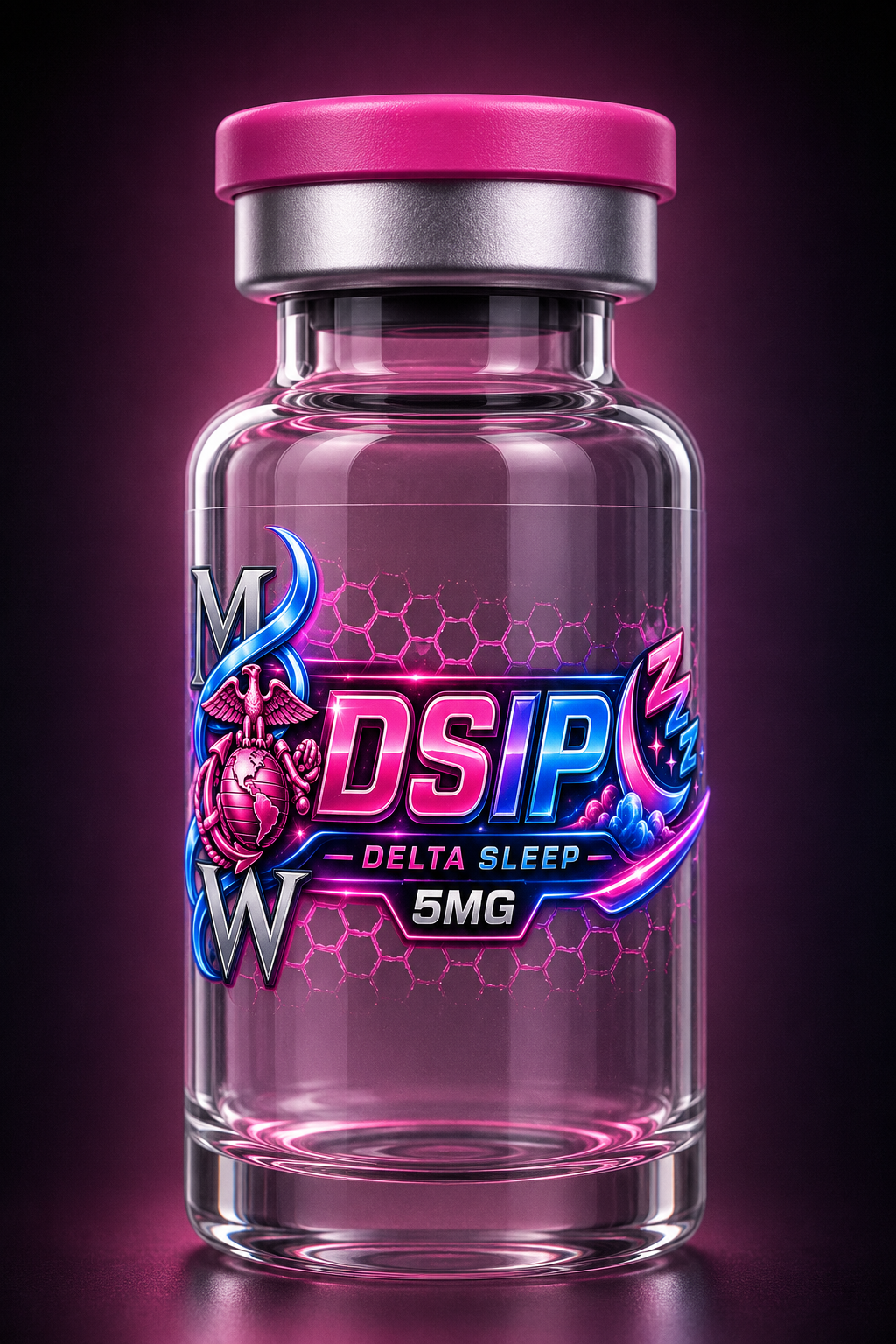
Sleep & Circadian-Rhythm Research Peptide
Delta Sleep-Inducing Peptide (DSIP) is a naturally occurring neuropeptide originally isolated during research into slow-wave sleep and sleep-associated neurological activity. It has since been investigated for its potential involvement in sleep regulation, neuroendocrine signaling, and physiological responses to stress.
Experimental research has explored DSIP in relation to sleep architecture, circadian rhythms, stress-response pathways, and nervous-system regulation. Of particular interest is its potential relationship with delta-wave activity, the slow brain-wave pattern strongly associated with deep, restorative stages of sleep.
Research Focus: Sleep Architecture • Delta-Wave Activity • Circadian Rhythms • Neuroendocrine Signaling • Stress-Response Research • CNS Research
Contents: DSIP — 5 mg
RESEARCH USE ONLY NOT FOR HUMAN OR ANIMAL USE
PRice
$105.00
- Face Cream
- In Stock (120)
- Palmitoyl Tripeptide-5 + Argireline
Regenerative & Tissue-Repair Research Peptide
BPC-157 is a synthetic peptide derived from a sequence associated with a protective protein found in gastric tissue. It is widely studied in preclinical research for its potential involvement in tissue repair, angiogenesis, inflammatory signaling, and gastrointestinal protection.
Laboratory research has examined BPC-157 in models involving tendons, ligaments, muscles, gastrointestinal tissue, wound healing, and vascular signaling. Researchers are also investigating its interactions with nitric-oxide pathways and cellular mechanisms involved in recovery and tissue remodeling.
Research Focus: Tissue Repair • Tendon & Ligament Research • Wound Healing • Angiogenesis • GI Research • Inflammatory Signaling
Contents: BPC-157 — 10 mg
RESEARCH USE ONLY NOT FOR HUMAN OR ANIMAL USE
PRice
$95.00
- Face Cream
- In Stock (120)
- Palmitoyl Tripeptide-5 + Argireline

Metabolic & Cellular Research Compound
5-Amino-1MQ is a small-molecule compound studied primarily for its interaction with nicotinamide N-methyltransferase (NNMT), an enzyme involved in cellular metabolism and NAD+–related biochemical pathways.
Research involving NNMT inhibition has explored potential effects on energy metabolism, adipose tissue biology, cellular NAD+ availability, and metabolic signaling. Because of these mechanisms, 5-Amino-1MQ has become an area of interest in laboratory research examining metabolic function, body-composition pathways, and cellular energy regulation.
Research Focus: NNMT Inhibition • NAD+ Metabolism • Cellular Energy • Metabolic Signaling • Adipose Tissue Research
Contents: 5-Amino-1MQ — 10 mg
RESEARCH USE ONLY NOT FOR HUMAN OR ANIMAL USE
PRice
$85.00
- Institutional Bulletin & Batch Notifications