
- Research Catalog
Molecular Compounds & Peptides
All research materials are HPLC tested (≥99% purity) with complete Certificate of Analysis (COA) availability.

- Face Cream
- In Stock (120)
- Palmitoyl Tripeptide-5 + Argireline

Triple-Receptor Metabolic Research Peptide
Retatrutide is an investigational peptide studied for its simultaneous activity at three metabolic hormone receptors: GLP-1, GIP, and glucagon receptors. This triple-agonist mechanism distinguishes it from single- and dual-receptor incretin compounds.
Research has examined retatrutide’s effects on appetite regulation, energy intake, glucose metabolism, insulin signaling, lipid metabolism, and energy expenditure. The glucagon-receptor component is of particular research interest because it may influence energy expenditure and hepatic metabolism alongside the incretin effects of GLP-1 and GIP receptor activation.
Clinical research has reported substantial changes in body weight and metabolic markers, while ongoing studies continue to evaluate efficacy, safety, and longer-term metabolic effects. Retatrutide remains an investigational compound and is not FDA-approved as of August 2026.
Research Focus: GLP-1 • GIP • Glucagon Receptors • Metabolic Signaling • Appetite Regulation • Glucose Metabolism • Insulin Signaling • Energy Expenditure • Body-Weight Research
Concentration: Retatrutide — 10 mg/mL
RESEARCH USE ONLY NOT FOR HUMAN OR ANIMAL USE
PRice
$120.00
- Face Cream
- In Stock (120)
- Palmitoyl Tripeptide-5 + Argireline
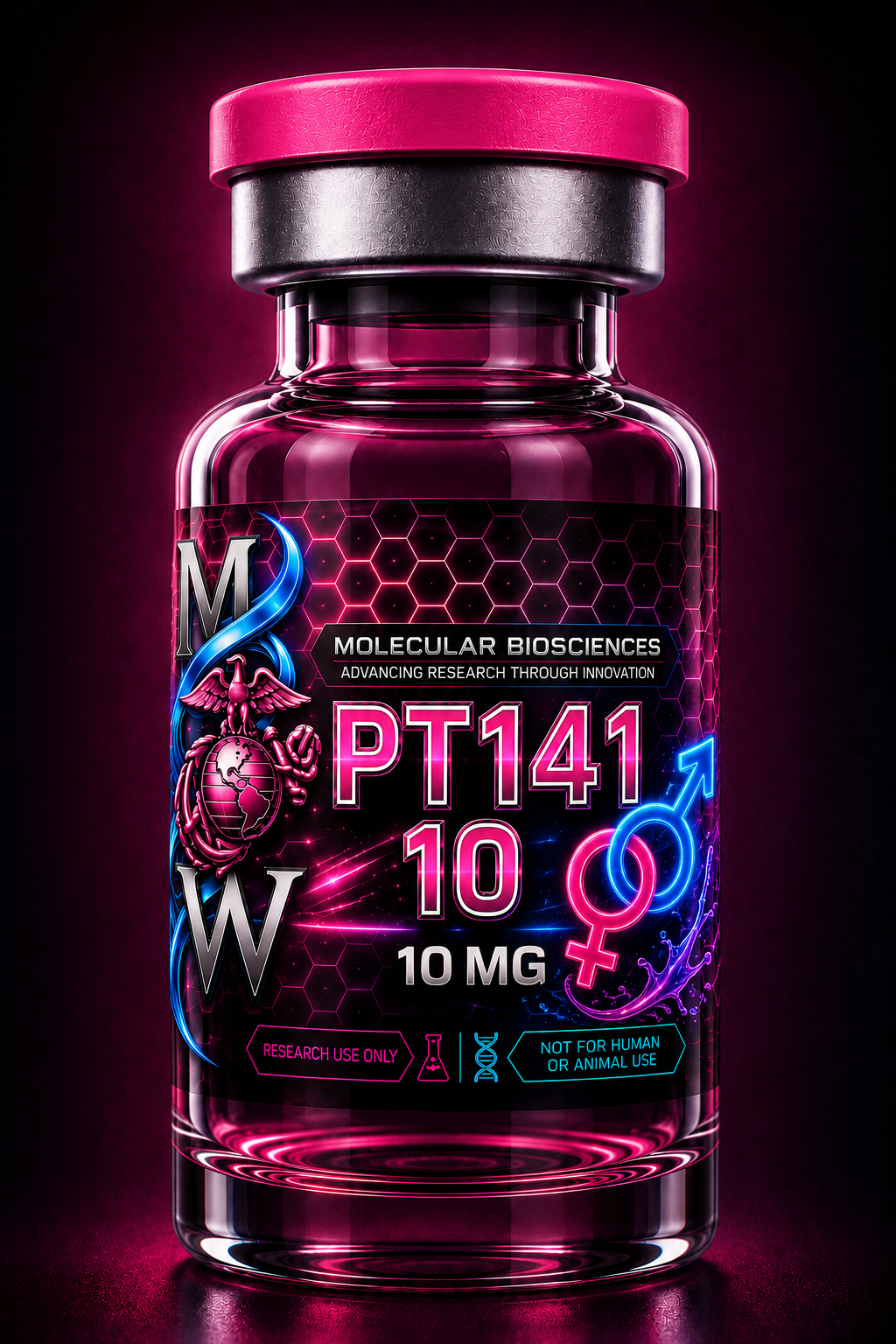
Melanocortin, Sexual-Arousal & Neuroendocrine Research Peptide
PT-141, also known as bremelanotide, is a synthetic melanocortin peptide studied for its activity at melanocortin receptors, particularly MC3R and MC4R. Unlike compounds that act primarily through peripheral blood-flow mechanisms, PT-141 research focuses on central nervous-system pathways involved in sexual motivation and arousal.
Research has investigated PT-141 signaling in both male and female models, including mechanisms associated with sexual desire, arousal, erectile response, and neuroendocrine regulation. Its effects are linked to melanocortin pathways within brain regions involved in sexual behavior rather than simply increasing genital blood flow.
PT-141 is particularly notable because bremelanotide has been clinically developed and FDA-approved as a prescription drug for a specific sexual-desire disorder in certain premenopausal women; however, a research-labeled PT-141 product should not be represented as that approved prescription product.
Research Focus: Sexual-Arousal Pathways • Libido & Desire Research • MC3R/MC4R Signaling • Melanocortin System • CNS Signaling • Erectile-Response Research • Female Sexual-Function Research • Neuroendocrine Biology
Contents: PT-141 (Bremelanotide) — 10 mg
RESEARCH USE ONLY NOT FOR HUMAN OR ANIMAL USE
PRice
$110.00
- Face Cream
- In Stock (120)
- Palmitoyl Tripeptide-5 + Argireline

Triple-Receptor Metabolic Research Peptide
Retatrutide is an investigational peptide studied for its simultaneous activity at three metabolic hormone receptors: GLP-1, GIP, and glucagon receptors. This triple-agonist mechanism distinguishes retatrutide from single- and dual-receptor incretin compounds.
Research has examined retatrutide in relation to appetite regulation, glucose metabolism, insulin signaling, lipid metabolism, energy intake, and energy expenditure. Its combined receptor activity provides researchers with a unique model for investigating how multiple metabolic signaling pathways interact.
The glucagon-receptor component is of particular interest because it may influence energy expenditure and hepatic metabolism, while GLP-1 and GIP receptor activity is associated with incretin signaling, glucose regulation, and appetite-related pathways.
Clinical research has demonstrated substantial effects on body weight and metabolic markers, while studies continue to characterize its efficacy, safety, and longer-term metabolic effects. Retatrutide remains an investigational compound and is not FDA-approved as of August 2026.
Research Focus: GLP-1 • GIP • Glucagon Receptors • Metabolic Signaling • Appetite Regulation • Glucose Metabolism • Insulin Signaling • Energy Expenditure • Lipid Metabolism • Body-Weight Research
Concentration: Retatrutide — 30 mg/mL
RESEARCH USE ONLY NOT FOR HUMAN OR ANIMAL USE
PRice
$90.00
- Face Cream
- In Stock (120)
- Palmitoyl Tripeptide-5 + Argireline

Cellular Energy, Mitochondrial & Metabolic Research
Nicotinamide adenine dinucleotide (NAD+) is an essential coenzyme present in virtually every living cell. It plays a central role in cellular energy metabolism, particularly through the transfer of electrons during biochemical reactions involved in ATP production.
NAD+ and its reduced form, NADH, are critical to glycolysis, the citric-acid cycle, and mitochondrial oxidative phosphorylation. Beyond energy metabolism, NAD+ also serves as a substrate for enzymes involved in DNA repair, cellular stress responses, gene regulation, and metabolic signaling, including sirtuins and PARPs.
Because cellular NAD+ levels can change with metabolic state and aging, it remains an important research target in studies examining mitochondrial function, cellular energetics, metabolic regulation, and age-associated cellular changes.
Research Focus: Cellular Energy • ATP Production • Mitochondrial Function • NAD+/NADH Redox Biology • Sirtuin Signaling • DNA-Repair Pathways • Metabolic Regulation • Cellular Aging
Contents: NAD+ — 100 mg
RESEARCH USE ONLY NOT FOR HUMAN OR ANIMAL USE
PRice
$250.00 – $300.00Price range: $250.00 through $300.00
- Face Cream
- In Stock (120)
- Palmitoyl Tripeptide-5 + Argireline

Melanocortin & Pigmentation Research Peptide
Melanotan I (MT1), also known as afamelanotide, is a synthetic analogue of α-melanocyte-stimulating hormone (α-MSH). It is studied primarily for its interaction with the melanocortin-1 receptor (MC1R) and its effects on melanocyte signaling and melanin production.
Activation of MC1R promotes eumelanin synthesis, the darker form of melanin involved in pigmentation and cellular responses to ultraviolet radiation. Research involving MT1 has therefore focused on melanogenesis, photobiology, UV-response pathways, and melanocortin signaling.
Unlike Melanotan II, MT1 is substantially more selective for pigmentation-associated melanocortin signaling and is not primarily studied for the broader appetite or sexual-function effects associated with MT2.
Research Focus: Melanogenesis • MC1R Signaling • Melanin Production • Skin Pigmentation • Photobiology • UV-Response Research • Melanocyte Biology • α-MSH Pathways
Contents: Melanotan I (MT1) — 10 mg
RESEARCH USE ONLY NOT FOR HUMAN OR ANIMAL USE
PRice
$80.00
- Face Cream
- In Stock (120)
- Palmitoyl Tripeptide-5 + Argireline

Mitochondrial, Metabolic & Cellular-Energy Research Peptide
MOTS-C is a mitochondrial-derived peptide encoded within mitochondrial DNA. It has attracted significant research interest because of its potential role in communication between the mitochondria and nucleus and its involvement in cellular energy regulation and metabolic adaptation.
Preclinical research has investigated MOTS-C in connection with AMPK signaling, glucose utilization, insulin sensitivity, metabolic flexibility, and cellular responses to energetic stress. AMPK functions as an important cellular energy sensor, helping coordinate metabolic activity when cellular energy availability changes.
MOTS-C is also being studied in models involving skeletal-muscle metabolism, exercise-associated adaptation, mitochondrial function, and age-related metabolic changes.
Research Focus: Mitochondrial Signaling • AMPK Pathways • Cellular Energy • Glucose Metabolism • Insulin-Sensitivity Research • Metabolic Flexibility • Exercise & Endurance Research • Healthy-Aging Research
Contents: MOTS-C — 20 mg
RESEARCH USE ONLY NOT FOR HUMAN OR ANIMAL USE
PRice
$70.00
- Institutional Bulletin & Batch Notifications